Some rise while others fall… building resilience
I believe calamity can be a great teacher. Or as C.S. Lewis put more eloquently …
“Hardships often prepare ordinary people for an extraordinary destiny.”
Early on in my career, I learned that after facing a life crisis, some people thrived, whereas others floundered.
In working at the V.A, I observed that some veterans returning from Iraq would recover from the horrors of war, and rebuild lives of deep meaning, whereas others remained brittle and scarred. At community mental health centers, I noticed that for some a diagnosis of illness, led to despair, yet for others, a newfound energy to create a life in line with their values.

Sexual assault left some survivors anxious and fearful, and yet, others recovered and become empowered and all the stronger from it. A divorce resulted in shattered self-confidence for some, whereas in others it catalyzed a re-ordering of priorities to a life imbued with more meaning.
Which psychological tools and emotional resources do people need to learn to pick up the pieces of shattered lives, and move from surviving to thriving?
What habits of mind, body and heart lead to increased resiliency so individuals are better protected for the next hurdle that life will throw at them?
Answering these questions has become my life’s work.
My Philosophy
My training as a clinical psychologist, equips me with the necessary tools to dissect the research. I read every research study and journal article to identify the interventions that are scientifically supported to create long lasting and meaningful improvements in well-being after crisis, not just reductions in symptoms. CBT, acceptance based, and behavioral health interventions show the strongest scientific support across multiple randomized controlled trials.
I love reading research, but my clients are my greatest teachers about what works and what doesn’t.
Many individuals get stuck in ruminatively retelling the story of a narrow and limited version of themselves. Cognitive decentering is a psychological tool that enables them to gain perspective, and rewrite their story. (Hayes et al., 2012)

Avoidance and suppression of difficult emotions is often a natural response after experiencing a painful event. But as Carl Jung taught us, ‘What we resist persists, and only grows stronger’.
Emotional agility, the skill of recognizing, tolerating, and moving through painful feelings, can be taught as a means of processing and releasing destructive emotions (Davids, 2016).
Good habits; sleep, food, exercise and self-care, form the basic building blocks of physical and mental health. People often know what they should do but have a hard time sticking to healthy routines.
Behavioral health interventions, including, monitoring, accountability, scheduling, dramatically increase the odds that people will turn these habits into long lasting ways of being. (Rubin, 2015).
My Methodology
Assessment and treatment planning are crucial. Psychological interventions which are not based on a biopsychosocial assessment are like throwing darts in the dark, and hoping that something sticks.
Twenty years of clinical experience and research led me to weave all of the methods with the strongest evidence base into a model for growth through adversity; the RE-MAP model. Comprised of the most effective interventions from CBT, acceptance based, and behavioral health therapies. It serves as a road map for guiding people through the process of thriving after crisis, teaching all the therapeutic ingredients for healing mind, body and heart to find meaning in and grow from hardship.

I also had the opportunity to test this model on myself when I was diagnosed with a neurodegenerative disease with a very uncertain trajectory.
I had 3 small children that still needed to be raised, so floundering was not a good option. I have walked the walk. I bring to my work a deep appreciation of what it feels like to fall apart, and pick up the pieces, bit by tiny bit.
My Credentials
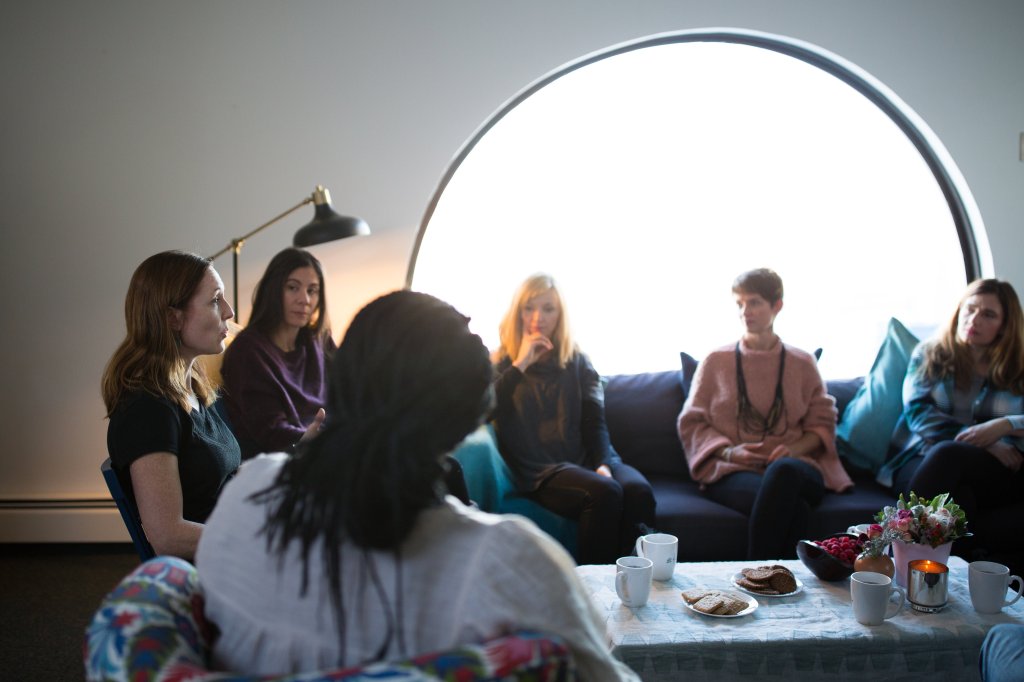
I have had the privilege of accompanying many diverse individuals and groups, along the twisty road of recovery and growth, across many settings, including the VA, community mental health and private practice. I also enjoy supervising doctoral and post-doctoral students.
Currently, I hold a private practice with clients from many corners of the world, and consult to Global Tech companies. I am also Clinical Director (and co-founder) of an international Mind Body Fertility Center (sagefertility.com), where I bring the RE-MAP model to women and couples experiencing infertility, an area about which I am passionate .
I completed my graduate studies at Columbia University and the University of Vermont, having studied as an undergraduate at University College Dublin.
I have trained extensively in empirically based acceptance and mindfulness based therapies, and am currently enrolled in the two-year Master Meditation Teacher Training program, through the Awareness Training Institute with world renowned teachers Tara Brach, PhD and Jack Kornfield, PhD.
I have conducted research and published papers on the impact of mindfulness practices on reducing anxiety, depression, and increasing overall well-being.
Me
My favorite thing to do in the world is swim in the sea with my husband, 3 kids and dog. I live with this motley crew between Dublin, Ireland, and East Coast USA.

When, I am not spending time with family or friends, my favorite place to be is on a silent meditation retreat. I went on my first 25 years ago, and have been hooked ever since.
 Ciara Byrne, PhD